As we had our class on Impostor Syndrome, I knew I had it from the start. I have always felt inadequate when it comes to test or projects throughout my life. As we draw near the end of OT school, I get the feeling more and more as we start our clinical rotations. I have received great feedback from my clinical instructors from previous fieldwork opportunities, but I still feel like I am an "impostor" in our field. When I took the Impostor Syndrome test and scored an 82 which states that I have intense impostor phenomenon experiences and I believe that to be true. The article that we had to read is going to help me as we start our first level II fieldwork placement I want to implement the five steps into my daily routine. I feel like if I do this, I will stop having the impostor syndrome as much. I think it is really important to self reflect in times that we are about to face because we should know that we have worked hard to be at the point we are currently. I think creating a list of accomplishments is a great way to show yourself that you can do it because you've done so much before. Accepting compliments is hard for me and that is something I hope I can work on soon. I plan to try to seek more mentorship opportunities so I can have a person to talk to when I start feeling like an impostor in our field. I have such a great passion for OT and I need to remember that when the impostor syndrome sets in. I know I have done all the work I can to prepare to start my journey and I know that there will still be a lot for me to learn once I get out into the field. I am glad that we had this class topic because it made me realize how hard I am on myself and that I need to do better. We have made it to the end of our didactic school portion and I should be very proud of my accomplishments!!
Wednesday, September 8, 2021

Wednesday, September 1, 2021
Diversity
I watched a TedTalk called "My road trip to the whitest towns in America" by Rich Benjamin. He went on a 27,000 mile trip for two years to the fastest growing and whites counties in America. He starts by mentioning a word called "whitopia" and he has three different definitions for it. #1: more than 6% population growth since 2000. #2: 90% of that growth comes from white migrants. #3: ineffable social charm, a pleasant look and feel. He went to three major counties that embodied whitopia. They were Coeur D'Alene, Idaho, St. George, Utah, and Forsyth County, Georgia. He stated that Whitopia operates at the level of conscious and unconscious bias. Some things have changed since 50 years ago. People are more acceptable to mingle and mix cultures in an appropriate way. But there are still individuals who act as if they're living in the past still. America is residentially and educationally segregated today as it was in 1970. It is important that we move forward as a country and get rid of the conscious and unconscious bias or we will never grow. The more we move forward, the diversity will grow. By 2042, it is predicted that white Americans will not be the majority race. I really enjoyed listening to this TedTalk because it reminded me how important it is to listen to each culture and race without judgement. As a future occupational therapist, it will be vital for me to remember this when treating someone who had a different culture or belief than myself. We should want to strive as a society to get rid of the bias and grow as a community. As a future OT, I pledge to always keep that mindset when treating every patient. I want each and every individual to grow and succeed!
Link to TedTalk
Documentation
I had the opportunity to practice my documentation skills on my last Level I Fieldwork rotation. Dr. Woods was actually my clinical instructor on my placement. Each night we had to write a SOAP note of what we observed that day. I am attaching a screenshot of my SOAP note that I wrote and her feedback on it.

PTE Journal Club: May
I am really enjoying attending these journal club meetings. I have more confidence in my knowledge with understanding medical terminology and studying scholarly articles. For this Journal Club meeting, we reviewed the article "Home-Based Occupational Therapy for Adults with Dementia and their Informal Caregivers: A Systematic Review". This systematic review investigated whether home-based occupational therapy interventions for adults with dementia and their informal caregivers optimized care recipients' performance of daily occupations and reduced caregiving burden and improved caregivers' sense of competence. The participants included community dwelling adults with dementia and their informal caregivers. People such as family or friends who provide care without being paid for their services were included. This was a systematic review of 20 studies reported in 22 articles. They used a customized data extraction form. They had a primary reviewer who screened all titles and abstracts. There was a disagreement between reviewers resolved through discussion with a third reviewer. The independent variable was home based OT intervention. The dependent variable is performance in daily activities for adults with dementia and caregiving burden and sense of competence for informal caregivers. The main findings included moderate evidence supported interventions provided jointly for adults with dementia and their informal caregivers using a combination of intervention strategies. Evidence from this review underscores the importance of using multifaceted intervention approaches provided jointly to promote performance in daily occupations for adults with dementia and improve caregiving capabilities for their informal caregivers. I determined that the study was not valid and reliable because it is not replicable and not generalizable. A limitation was that the included studies used different terms for similar outcomes - for example, ADLs versus self-care. Also, some studies used author-developed outcome measures with unknown external validity and generalizability. There was variability in the reporting of types and stages of dementia. Most studies examined ADLs, IADLs, or both without describing specific activities, thereby limiting their generalization to clinical practice. A strength of the study was that it adds support for the use of home-based OT interventions and they provided high quality of evidence. Some future recommendations are that future empirical research is needed to investigate the efficacy of multifaceted intervention approaches for specific types of dementia (e.g., vascular dementia) and at particular stages of dementia (e.g., mild, moderate) to offer sound evidence supporting clinical decisions for occupational therapy practitioners. Also, it would be good to have a clearer definition for occupation therapy practitioners. The frames of references that went along with this article include PEO Model, Ecology of Human Performance, MOHO, and COPM. Occupational performance can be enhanced for adults with dementia when compensatory intervention strategies are embedded within their daily routines. I have enjoyed learning about these topics and plan to continue to attend journal meetings to enhance my skills more and have lively discussions with my peers.
PTE Journal Club: February
During our February Journal Club meeting, we reviewed the article "Effectiveness of Interventions to Address Cognitive Impairments and Improve Occupational Performance After Traumatic Brain Injury: A Systematic Review". I really enjoyed reviewing this article because I knew some information about occupational performance after a TBI from our EBP classes in the past. The study looked to determine the effectiveness of interventions addressing cognitive impairments to improve occupational performance for people with traumatic brain injuries. They looked at adults who had sustained a traumatic brain injury only. It was a systematic review that consisted of a total of 37 studies that met all the inclusion criteria. There were 9 Level I systematic reviews, 14 Level I studies, 5 Level II studies, and 9 Level II studies. They searched all the databases and related studies that were similar to group them into themes. The independent variable observed in this study was the type of cognitive intervention (specifically interventions to address problem with memory). The dependent variable in the study was occupational performance of the people with TBIs. There was strong evidence that supports use of direct attention training, dual-task training, and strategy training to optimize executive functioning, encoding, and use of memory compensations, including assistive technology. However, in most studies, occupational performance was a secondary outcome, if it was evaluated at all. We concluded that the study was valid and reliable because it is a Level I review with a good amount of RCT. It also used multiple researchers. One major limitation of the study was that all forms of bias could not be eliminated. More studies are needed where occupational performance is the outcomes. Expansions of options for measuring occupational performance beyond self-reports. Development of a wider range of reliable and valid performance-based cognitive outcome measures. The frames of references that applied to this study would include Cognitive Behavioral Frame of Reference, Rehabilitative Frame of Reference, Allen's Cognitive Levels, and Toglia's Dynamic Interactional Approach. The implications for our practice would be the cognitive intervention combined with client-centered, occupational-oriented approach have the potential to minimize limitations experience by individuals with TBI. I am enjoying having in-depth discussion with my classmates to further my clinical vocabulary and knowledge.
PTE Journal Club Meeting: January
For the January PTE Journal Club meeting, we discussed the article "Occupational Therapy Group Interventions in Oncology: A Scoping Review". This study examined the association between occupational therapy-based oncology groups and improved functional activity of daily living outcomes for adults with cancer. By being functional, you will see an improvement and an increase engagement in ADLs. The population that they looked at involved adults in the inpatient and outpatient setting that had a diagnosis of cancer. They looked at ages 25-28 years old. Most of the individuals in this study were women even though there were a few men. There was various types of cancer and participants were at different stages with their cancer. This study was a scoping review. It was chosen to explore all existing and accessible peer-reviewed evidence on the topic. There were eight research studies chosen for this article. There were only eight articles that they found that met all the inclusion criteria. The articles reviewed were 2 randomized controlled trials, 1 case study, 1 descriptive exploratory research study, 1 mixed-methods study, 2 pretest-posttest studies, and 1 longitudinal prospective comparative study. The results indicated that occupational therapy groups led to a significant increase in occupational performance and satisfaction, an improvement in functioning, and a decrease in fatigue. There is benefits of shared experience. This study was found to valid and reliable because they use inclusion and exclusion criteria, with an aim to provide a clear and reproducible methodology. The search strategy could also be easily repeated. Some of the recommendations for future studies that we discussed included a larger sample size. They could also have a more consistent type of cancer that they are looking at and specify the stages each individual is at. If they had more inpatient results, it would help more. We also said that they could assess the impact of IADLs. The frames of references that went along with this study included social participation, MOHO, PEO, and Canadian Model of Occupational Performance. This scoping review demonstrated that OT groups in oncology lead to positive patient outcomes. The findings from this review not only are applicable to OT practitioners working in oncology-related settings, but also are relevant for practitioners who work with patients with caner in other settings because patients with cancer are treated both in general hospitals and units as well as in cancer-specific centers. I really enjoyed reading this study and discussing it further with my fellow classmates. It was a good article since we don't dive deep into oncology and OT during our coursework.
Sunday, July 25, 2021
Locus of Control
Locus of control has to do with the way people believe certain events have control of outcomes in their lives. An individual can either have an internal locus of control or an external locus of control. People who have an internal LoC tend to believe that they have control of what happens in their life. They believe that the effort and time that they put into something will produce a certain result. They tend to not believe in luck or happen chance. They believe in facts and their own effort. These individuals are usually more motivated to work harder to achieve their goals because they believe it is possible if they put forth the effort need. They also take responsibility for the events that happen in their life.
Individuals who have an external locus of control believe that the events in their life that happen are the results of external factors. They believe that they have no control or cannot influence things that happen. They believe in luck, fate, and chance. These people have a more relaxed state of mind when thinking about things that happen their life and they don't tend to get anxious much. To me, they have more of a free spirit than individuals with an internal locus of control. Some may even say that they don't work hard for things. Wether a person has an internal or external locus of control can come from genetic factors or even the experiences a person faces at a young age. Parents can even have an influence on a child's locus of control.
When I did the Rotter's Locus of Control Scale test, I found out that I had an internal locus of control. It made since to me because I have always thought that I was controlled the results that happened to me. I know that when I put a lot of time and effort into studying for a test, I have a better chance of doing it better than if I didn't study at all. I know that not studying for a test and hoping I will get lucky has always seemed odd to me. I believe that my parents had a little influence to my LoC. They always told me that if I worked hard for something, I would have a better chance of achieving it. I am grateful for that mindset because it has made me work hard to be where I am today and how I want to be as an OT. I believe that having an internal locus of control will help me I treat patients because I will want the best for the and will know how to motivate them and encourage them to have the same mindset. That they will get better if they work hard for it. I enjoyed learning about this topic and learning that I have an internal LoC.
Tuesday, December 1, 2020
The Honor Code
UTHSC has an honor code in place to help keep our school accountable and trustworthy. I read the honor code in detail from our school's website. I am so honored to go to a school where they take pride in enforcing the honor code for each department. I think our department has three honor code counselors (students) that report any suspicious activity to the honor code representative (faculty member) for our department. I think it is so important now more than ever that the school tries to reinforce the honor codes. It can be so easy for students to cheat since we are distance learning for the time being. If test are not proctored, then it is very easy for a student to cheat. I think it is important that every professor emphasize the importance of following the honor code daily and especially before a test or quiz. It is also the responsibility of each student to have the respect to uphold the honor code since we each had to sign it before starting school. If they do not uphold it, the person they hurt the most is themselves. I believe our department does a fantastic job of emphasizing the honor code and reminding us of how important it is. I pray that as we continue to earn our degree's from home that each student will remember the code that they signed and that it is important to uphold it. We should want to do our part in making our school and department honest and trustworthy to others.
Reaching Out to Potential OTs
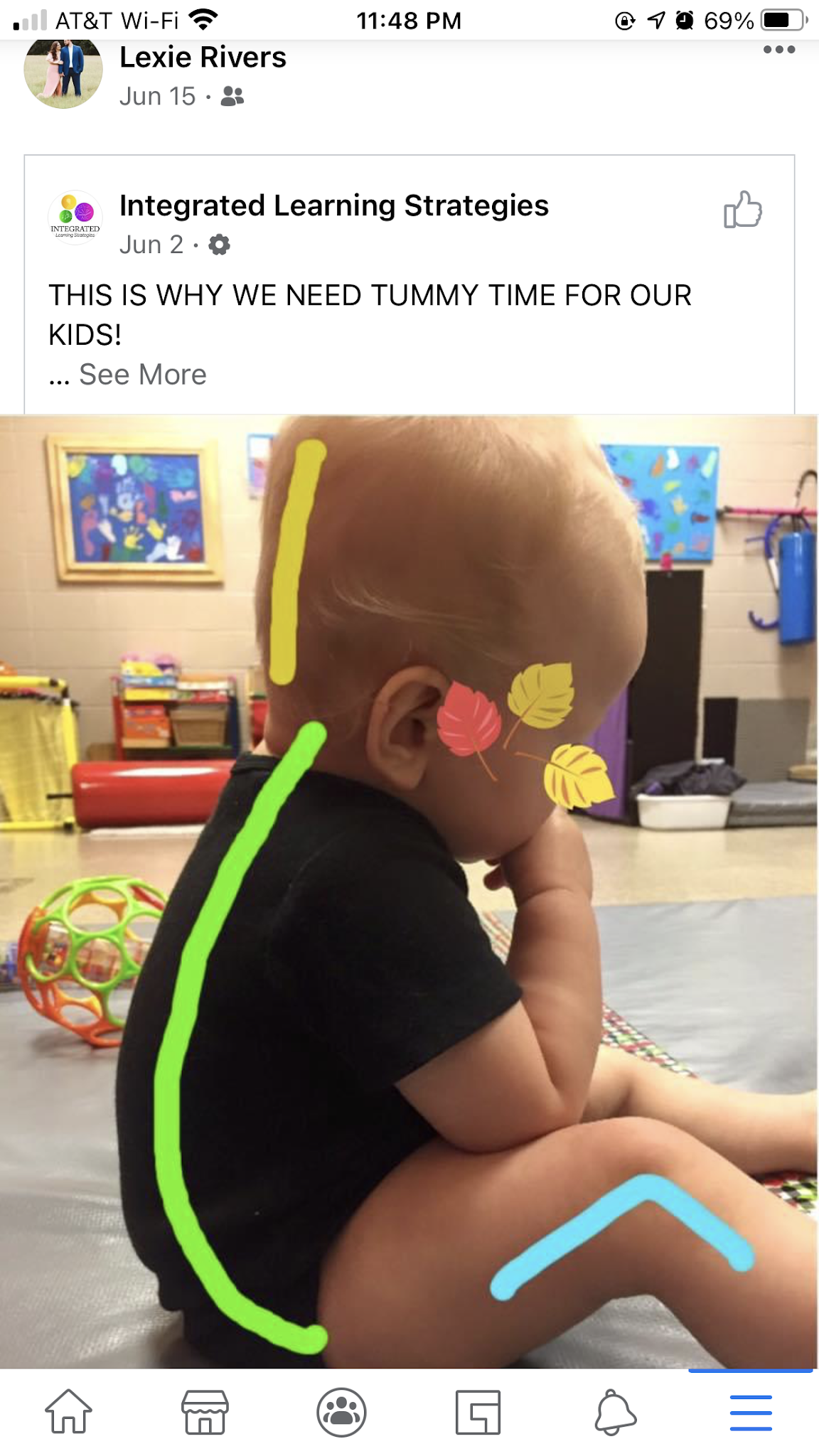
I have a passion for the field of occupational therapy and I believe it is so important to share what OT is and how you can become one. I have had so many doctors and nurses say to me that they need more OTs now that we are in a pandemic. They tell me how vital a role they play in the recovery process for patients. I personally believe that the job demand will be great in 2021 for occupational therapist. I love telling anyone I can about OT and how I love being a student in this field. I post things on my facebook monthly about occupational therapy. I even tried to recruit a friend of mine to apply to UTHSC OT program based on the post she saw me sharing on facebook. It is amazing the world we live in with technology. There are so many ways to reach people now. If I didn't share multiple post about our program and what OT is, I don't think my friend would have been interested in the field of occupational therapy. She used to want to be a physical therapist and had no clue what an OT did until she asked me. She was amazed at the things we could do because she felt those were the things she was missing when looking into PT. It is so good to see how Facebook can help tell people about the field of occupational therapy.
Here are some examples of the thing I post on Facebook about OT and our school!




Sunday, August 30, 2020
Media Project Assignment: "Dressing Pan"
For this project, I was assigned to use a cookie sheet as my household item. My client's name was Paula and she was diagnosed with Parkinson's disease. She is a 76 year old woman who used to teach history at a college. She is stated to be a strong willed and independent woman. She wants to be able to do things like bathing, dressing, and communicating with her college peers and husband again independently. She currently lives in a skilled nursing facility, but would like to be back home with her husband. It is important to her that she becomes more independent again so she can move back home. She is not too fond of occupational therapy services and really doesn't understand what it is or what she is doing. She does not like group therapy sessions either. When trying to come up with an innovative idea for Paula to use, I thought about the things most important to her. She wants to be home with her husband and be able to take better care of herself. I knew then that I wanted to come up with something that would help with dressing herself. I know not being able to do that can feel demeaning to her. She stated that it take forever for her to button up her blouse or shirt. I wanted her to be able to do that, but in a way that would be interesting for her to practice. When I observed an OT before getting into the program, I had seen a device used to help children develop fine motor skills like buttoning up a shirt. I knew that the same device would not work for Paula since she had tremors and the device I had seen before was flimsy and that would only make things worse.
I decided that I could use the cookie sheet as a stabilizer for button device. It would provide support and stability a person with tremors would need. I decided to get a variety of button sizes so it would give a range of difficulty. Shirts are made with all different button sizes so I thought it was important to practice with the easiest ones and the most difficult ones. I knew fine motor skills start to deteriorate when a person is diagnosed with Parkinson's disease, but I never really thought about the specific skills that would be hard for them to do. Practicing buttoning a shirt seems like a child task, but it is important for day to day life. Most jeans and pants have some sort of button that you have to work with. I see now that it could be so frustrating for a person who develops PD. They would struggle every time they got dress, every time they had to undress, or even every time they had to go use the bathroom. It would take up so much time struggling to button or unbutton something. Practicing with a support allows them to focus on just the button and not about if they will drop the fabric or not.
Doing this assignment gave me a great appreciation to all the OTs before me who have came up with such creative interventions for their clients. It took me a few days to thing what I could do that would be the most helpful for my individual client and also thinking how other clients with the same diagnosis could use it. It also taught me how to look at the personal details in a case. Yes there are things that are somewhat routine for diagnosis like Parkinson's disease, but it is important to look at what the client wants to accomplish at the end of treatment versus what you may want as a standard care. Diseases that are degenerative are the worst to be. I cannot even imagine what it must feel like to know how to do something one day and not be able to do it the next. This assignment has given me an insight to how a client may feel. I feel like I will be a better occupational therapist because I know that they want to get better just as much as I want them to. It has also taught me to be creative and try new skills for the sake of an intervention. I did not know how to sew a button to fabric, but I asked my mother to teach me and now I have a new skill that I can put to future use! I really enjoyed doing this assignment because it made me think and try to create something fun!
Here is a link to watch me explain just what a "Dressing Pan" is!! :)
Neuro Note #5: CVA (Stroke)
Sunday, August 9, 2020
Neuro Note #4: ALS
Amyotrophic lateral sclerosis (ALS) is one of those terrible diseases that we still do not have a cure for. ALS is a condition that affects the nervous system in the brain that causes loss of muscle control. I read a blog post called "One Year" by a man named Ray. He gave a personal perspective of how ALS affects ones life. He had a whole blog about his journey of living with ALS, but his blog post tells about his first year living with ALS. He talks about the process of telling everyone close to him that he had ALS. He said it was the hardest thing he had to do and that it was draining. He felt that way because he didn't know what to say and the people he told didn't know what to say either. I can only imagine being diagnosed with an incurable disease and having to tell everyone I know that I was dying and there is nothing that can be done about it. It is hard to process the thought of dying yourself, but knowing that you are telling people awful news cannot be easy at all. With this disease, there is no specific time line of how fast the muscles will start loosing their function. Ray thought that in a year he would still be pretty much the same as he was when he was diagnosed. He found that it wouldn't be true. He was getting tired very easily. He had trouble eating independently, and it took him a long time to finish each meal. I feel as he felt that he was a bother to those around him because he stated that people usually were cleaning dishes around him and he felt bad that he couldn't help. He also stated that it took him a while to get dressed with help and it was even harder to do it by himself. He had to have a whole new wardrobe since being diagnosed with ALS so that it would be easier for him to get dressed by himself. Reading through his experience should make anyone feel blessed that they can do simple things as dressing themselves independently and to not take anything for granted because it can be gone so soon. I wanted to read this blog post to see what life was like at the initial start for someone who has been diagnosed with ALS. This is the perfect blog to read for someone to get the perspective on the person diagnosed. We can read all about the diagnoses and symptoms of ALS, but knowing how a person diagnosed with it lives helps me understand the disease better. I learned that the best thing you can do for a person diagnosed with this disease is to be there for them and help them learn how to adapt to the new living situation. It is important that they know all the effect of the disease and how to properly prepare their current living environment. It is important for them to know that there is no specific time line for when the muscles will lose function. It is also important for them to have a support system. They will need someone to help them function independently in their daily life. I strongly recommend reading the whole blog by Ray. It give a great perspective on how he found joy through this trial in his life and what to expect of someone who is diagnosed with ALS.
Photo & Blog from:
Rays Little Ride. (2016, May 24). One Year. Retrieved from https://rayslittleride.com/2015/12/16/one-year/
Saturday, August 1, 2020
Neuro Note #3: Traumatic Brain Injury
Gorgens, K. (May 2010). Protecting the brain against concussion [Video]. TED Conferences.
https://www.ted.com/talks/kim_gorgens_protecting_the_brain_against_concussion#t-541603
Sunday, July 26, 2020
Neuro Note #2: Alzheimer's Disease

Picture and Article came from:
Seniors Flourish. (2019, February 11). OT's role in helping kids understand a grandparent's dementia. Retrieved from https://seniorsflourish.com/kidsanddementia/
Friday, July 17, 2020
Neuro Note #1: Parkinson's Disease
Tuesday, June 16, 2020
Social Determinants of Health
Wednesday, June 10, 2020
Locomotion and Adaptive Devices
Tuesday, June 2, 2020
Transfers
The order of hierarchy of mobility skills is as follows: bed mobility, mat transfer, wheelchair transfer, bed transfer, functional ambulation for ADL, toilet and tub transfer, car transfer, functional ambulation for community mobility, and community mobility and driving. I think that this hierarchy is in this specific order because you start out with simple task of transfer and then work your way up to more complex tasks. I agree with the order because I believe it is easier to complete the simple task before trying to master harder tasks. I have seen this work in my experience as a physical therapist technician. I have seen clients start out trying to get off the mat by themselves to being able to get into a wheelchair by themselves after surgery. I think every client is different though. Sometimes I would see clients be able to transfer from the wheelchair to the mat with no problem, then struggle to get from the mat to the chair. I believe that as occupational therapist, we can adapt to any different situations that may arise. Even though a client may not follow the exact steps in the hierarchy of mobility, we need to be flexible to each specific client. I have also had the experience of seeing someone fall down the hierarchy of mobility. My grandmother was diagnosed with Alzheimer's Disease about 13 years ago. I have seen here be functional enough to drive to know she cannot get out of the bed by herself anymore. Even though she went backwards down the hierarchy, she did progress through each level of mobility skill. Overall, I think this approach to the hierarchy is well because it allows you to start from an easy level or level that if comfortable to the individual and build up from that point.